



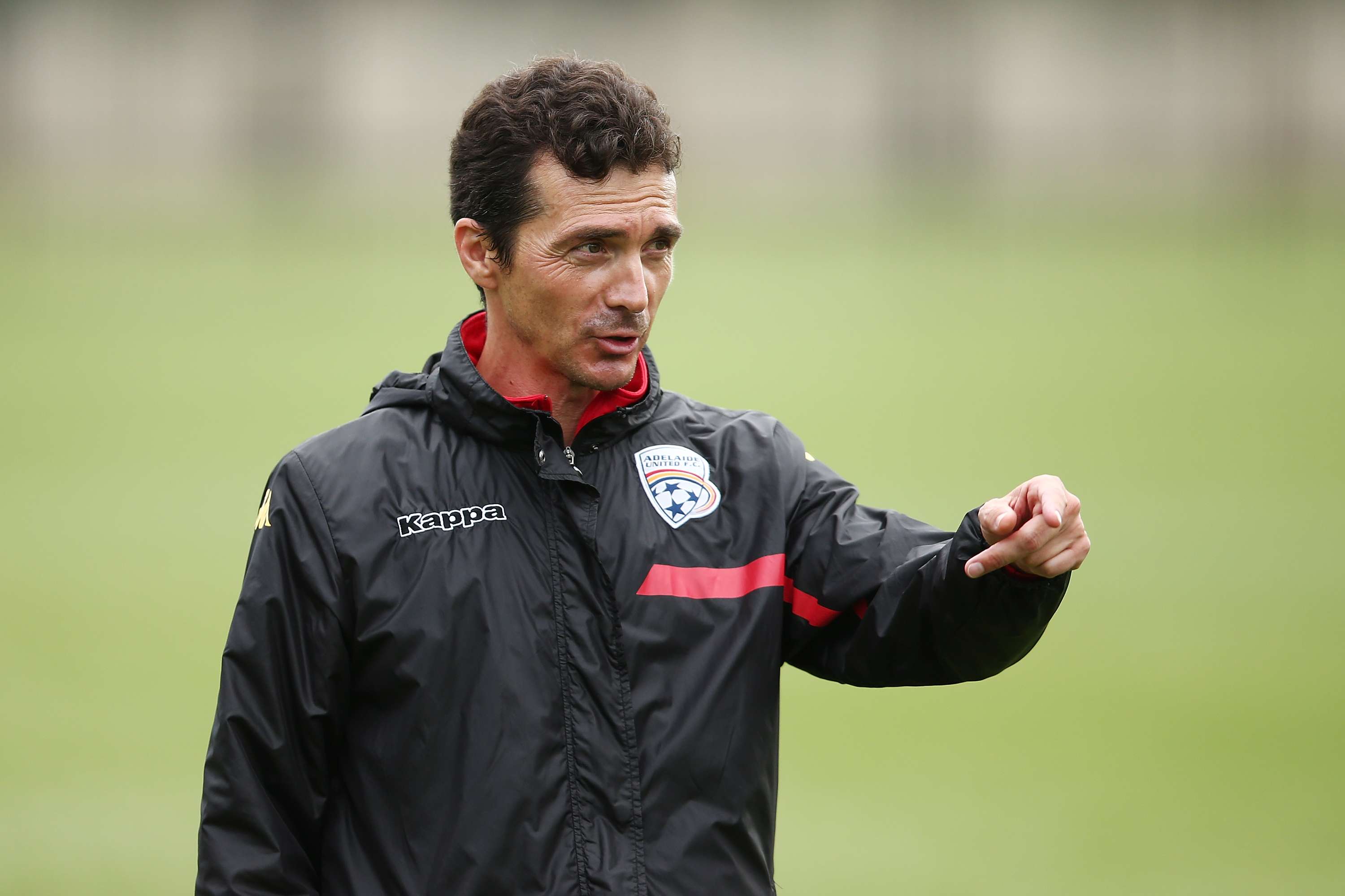
Before the likes of Lionel Messi, Xavi Hernández, Sergio Busquets, Andrés Iniesta, and Lamine Yamal graced Camp Nou, the very first La Masia graduate to become a legend for FC Barcelona was Guillermo Amor Martínez.
Born in Benidorm, Spain, Amor earned an invitation to Barcelona’s brand-new academy in January 1980, where he ascended the youth ranks and eventually became a key figure in Barcelona’s ‘Dream Team’ midfield under Johan Cruyff.
With Amor running the show, Barcelona were able to terminate Real Madrid’s domestic dynasty and establish themselves as Spain’s preeminent force, winning four straight league titles from 1991 to 1994 and claiming a first-ever Champions League title in 1992.
He also made his mark for the Spanish national team, competing in the 1996 Euros and 1998 World Cup, after which he departed Barcelona as the winningest player in club history. Amor spent two seasons at Fiorentina before returning to Spain, helping newly promoted Villarreal consolidate their place in LaLiga, followed by a swan song with Scottish side Livingston.
Since retiring in 2003, Amor has undergone four different advisory roles with FC Barcelona, as well as spending three years in Australia as Adelaide United FC’s Technical Director and Head Coach, where he led them to their lone A-League Championship. Having departed FC Barcelona in 2021, the 58-year-old now spends his time working with his oldest son (a licensed FIFA agent) in his consulting and player representation business in Barcelona.
Get Spanish Football News spoke to Amor about a plethora of topics.
After spending the entirety of your life in Europe, what was it like moving to Australia and working with Adelaide United from 2014 to 2017?
I was working for FC Barcelona, and then some decisions were made, some changes happened, and so I had to leave….that was the only way for me. Whenever I leave Barcelona, I suffer quite a lot every time, so I had to put some distance between us. I had to go very far away, because otherwise I’d be here in Barcelona, constantly seeing Barcelona on the TV and the newspapers and the radio, so I had to go far away, and the less said about it the better. Adelaide is a club in the south of Australia, and I had a friend of mine, Josep Gombau, who was coaching there. When I left Barcelona, I asked him, ‘Will you let me come spend a month with you? I’m going for a month, will you you let me do some field work and get to know the Australian League a bit and the players, and how the competition works? He said yes, so I got involved and went there for a month, and after a month, I didn’t go back to Spain because he told me, “Hey, look, you’re going to stay on as technical director, I’ll be staying as the coach, and we’ll work together here.’
I had to sort out some paperwork in order to live and work there, my wife and one of my sons came to Australia, and in my first year as Technical Director, we won the cup. Then, after the first year, Josep had to leave for a new project in the United States, and he said to me, “Hey, do you want to stay?” I said, ‘You don’t mind if I stay, do you? He said, ‘No, stay and coach,’ so that’s what I did, I spent the next two years as the manager. The first year was unique in every sense, and in the second, there were some changes and it was a bit more difficult, so I ended up having to return to Barcelona, but it’s one of those experiences that you carry with you forever. There are times when you do things in life, you go to places, jobs, experiences, trips, and these are the things you remember, the things that stay with you forever. It helped me a lot because sometimes you have to suffer in order to come back, right? And when I went to Australia, the beginning wasn’t easy either, from what I found, what I was doing, and where I was living. But in the end, you have to keep going and going and going until everything falls into place, and the truth is, it was a very good three years.
As you mentioned, what doesn’t kill you makes you stronger. Is there a single example of adversity from your life that this phrase truly echoes in terms of your development?
It’s always said that people who normally achieve their goal and get to play at a club like Barcelona usually do so after years of working. It’s mostly about having a fair and appropriate mindset: I’ve seen many very talented footballers with the qualities where you thought, “This one’s certain to make the first team,” and then you were wrong. There were others which were the opposite, where you might not have seen so many technical conditions, the talent wasn’t that refined, but here *points to his head* they were incredibly strong and they ended up playing in LaLiga or even ended up playing for the Barcelona first team. In the end, I think you have to balance everything out a bit, but really, if you’re mentally strong, you can achieve great things. Playing in a club like Barcelona already indicates that you have to keep going up the different categories, starting small and gradually moving up. That’s already difficult because every year there are many more kids who don’t continue, and there are new signings, and the following season, the same thing happens. That meant a lot of pressure and stress for many guys: they were suffering all night, wondering if they were going to keep going, or if Barcelona were going to dismiss them; they were going through all that those years.
Aside from having a bit of a club mentality, that obligation or that mindset of saying, “We have to win on Sunday,’ that also helps you be mentally strong, saying, “We have to win here. We have to dominate.” And then, naturally, the tough times you might have during your career at any moment, whatever it may be, a minor injury, a problem, a defeat, sometimes a defeat makes you grow and learn. The statistics are there, and you can see quite a few moments during my time at Barcelona where we took a real beating and lost an important match, but from that defeat, we ended up winning everything. Sometimes you need a wake-up call in life; you have to fall, but you have to get up quickly, and I think you have to want it. You have to want to be something in life, you have to want to achieve your goal, you have to work for it, and you have to believe in yourself. I think it’s important to believe in yourself and say, ‘I’m a football player, I want to be a football player, I want to make it happen, I want to earn it, and I’m going to get it.’ Then maybe you don’t get it, but at least you have to go in with this mindset, because if you spend your whole life sacrificing, striving, being away from home and away from the family for years, and then you relax and throw it all away over trivial things, well, that’s a mistake, isn’t it? You can’t stop, you have to keep going and continue and get up without problems and keep going, you have to say, ‘We’ve lost, yes, but we’ll win on the next match on Sunday.’ I speak for myself, but I also speak a little for all the professional footballers, they need to adopt this mentality.